Your browser does not support JavaScript !
Skip to main content
Other Languages
English
中文
Français
Español
Deutsch
日本語
한국어
русский
Português
لمحة عن تايوان
Tiếng Việt
Bahasa Indonesia
ไต้หวัน ในหนึ่งนาที
Bahasa Melayu
ТАЙВАНИЙГ нэг цонхоор
ताइवान एक नज़र में
|
Sitemap
|
Government Agencies
NEWS
ABOUT TAIWAN
HISTORY
POLITICS / DIPLOMACY
ECONOMY
SCIENCE / TECHNOLOGY
EDUCATION / CULTURE
MEDIA
NEWS
ABOUT TAIWAN
HISTORY
POLITICS / DIPLOMACY
ECONOMY
SCIENCE / TECHNOLOGY
EDUCATION / CULTURE
MASS MEDIA
中文
|
Other Languages
|
Sitemap
|
Government Agencies
Welcome!
.
:::
Home
ABOUT TAIWAN
About Taiwan
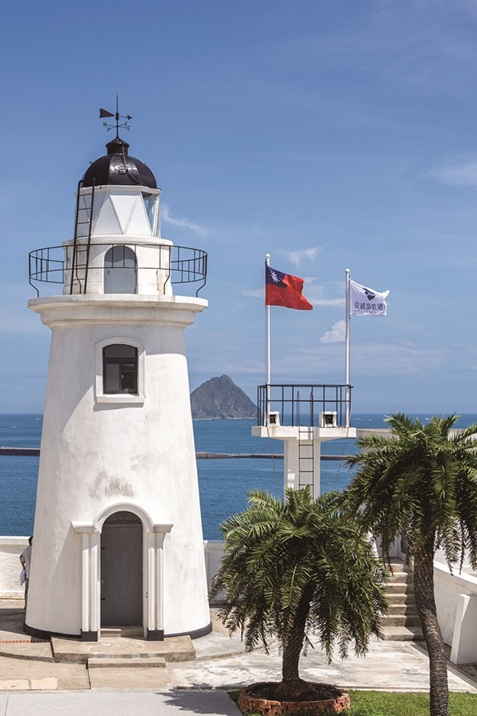
Keelung Lighthouse, built on the western headland of the harbor mouth in 1899, offers visitors spectacular views of the port and ocean.
(Chen Mei-ling)
NATURAL TAIWAN
Yushan, also known as Jade Mountain, is the highest peak in East Asia.
Around 20 percent of the country’s land area is protected.
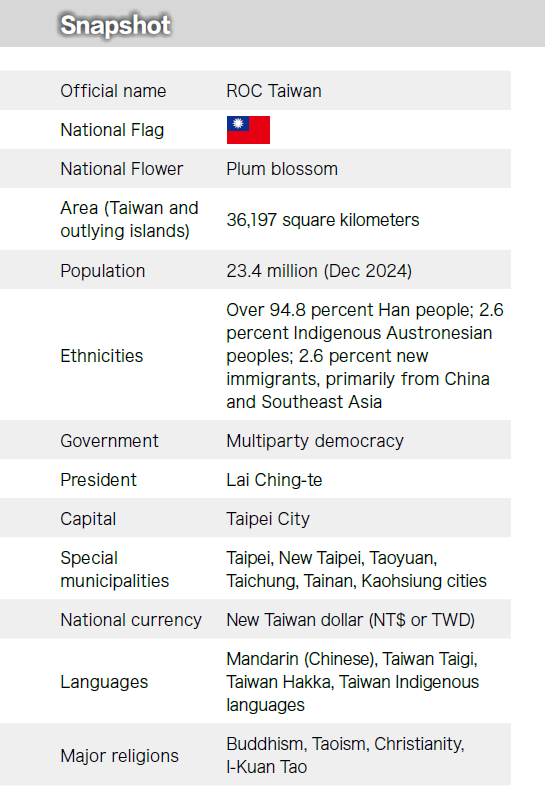
Taiwan is situated in the West Pacific between Japan and the Philippines. Its jurisdiction extends to the archipelagos of Penghu, Kinmen and Matsu, as well as numerous other islets. The total area of Taiwan and its outlying islands is around 36,197 square kilometers. At about the size of the Netherlands, but with a population of some 23 million, Taiwan is more populous than three-quarters of the world’s nations.
VISITING TAIWAN
Citizens of more than 62 countries and territories enjoy visa-free entry to Taiwan for 14, 30 or 90 days.
Taiwan has a 24-hour multilingual travel information hotline (0800-011-765).
With its unique fusion of cultures, breathtaking scenery, diverse cuisine, exciting city life and well-developed hospitality industry, Taiwan is an ideal destination for all types of travelers.
PEOPLE
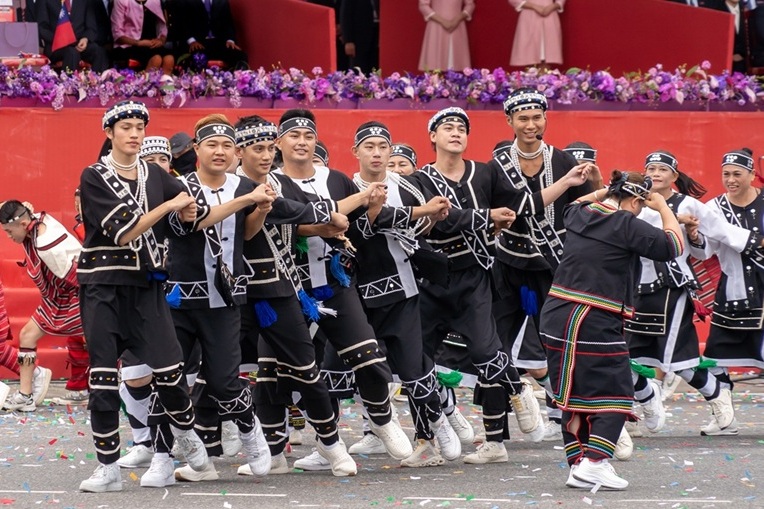
There are 16 officially recognized Indigenous tribes in Taiwan.
The nation is home to over 600,000 new immigrants, most from China and Southeast Asia.
While Taiwan may be described as a predominantly Han Chinese society, with nearly 95 percent of the population claiming Han ancestry, its heritage is much more complex. The successive waves of Chinese immigrants that began arriving in the 17th century belonged to a variety of Han subgroups with mutually unintelligible languages and different customs.