In accordance with constitutional amendments promulgated in June 2005, the number of seats in the Legislative Yuan was reduced from 225 to 113, and legislators’ terms were increased from three to four years. Under the new legislative election system, each electoral district elects just one seat. Each voter casts one ballot for the district and another for atlarge seats. The power to ratify constitutional amendments is exercised by citizens through referendums.
Levels of Government
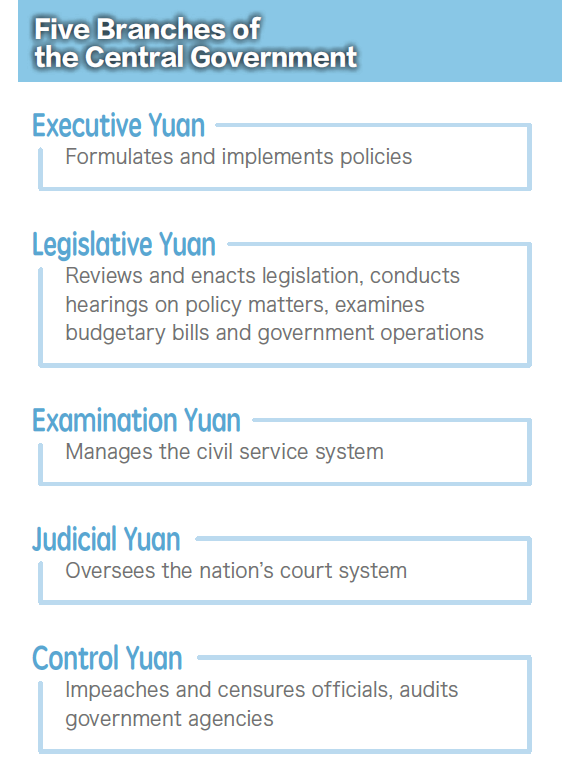
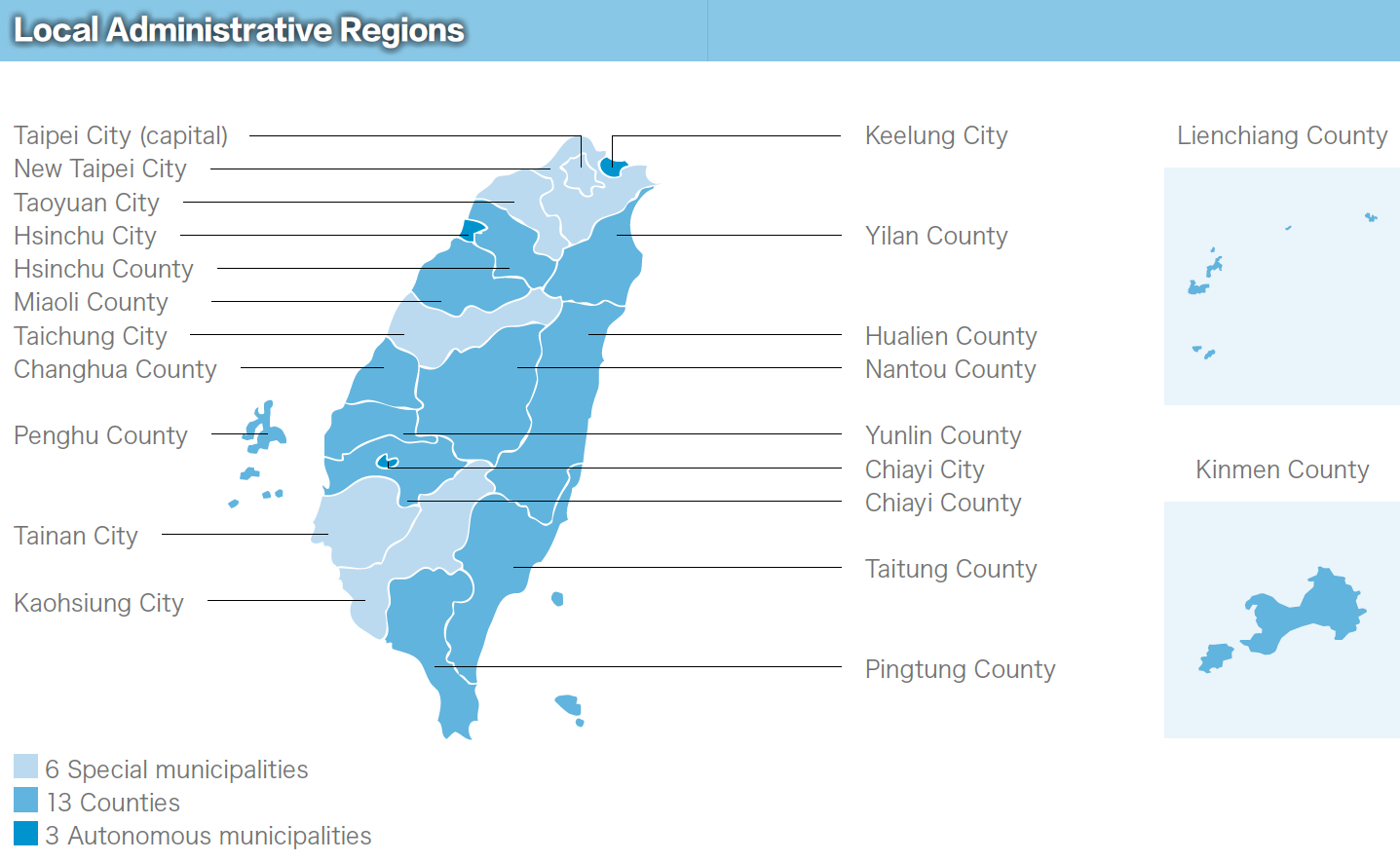
The central government comprises the presidency and five major branches, or yuans. The local governments at present include those of six special municipalities, 13 counties and three autonomous municipalities with the same status as counties. Since 2014, all heads and representatives of local governments have been popularly elected simultaneously in cities and counties across Taiwan every four years. In addition, there are 198 county-administered townships and cities, as well as 170 districts—including six Indigenous mountain districts—in autonomous and special municipalities.
Special municipalities are top-level administrative entities that fall under the direct jurisdiction of the central government. They play an important role in leading regional development. This status gives access to greater government funding and the opportunity to set up additional agencies and employ more civil servants. In order of population, the six special municipalities are New Taipei, Taichung, Kaohsiung, Taipei, Taoyuan and Tainan cities.
Presidency and Premiership
The president and vice president are directly elected, serve terms of four years and may be reelected for one additional term. The president is head of state and commander in chief of the armed forces, represents the nation in foreign relations and is empowered to appoint the heads of the four branches of government. This includes the premier, who leads the Executive Yuan and must report regularly to the Legislative Yuan, or Legislature. The heads of ministries, commissions and agencies under the Executive Yuan are appointed by the premier and form the Executive Yuan Council, or Cabinet. The Executive Yuan is currently undergoing restructuring to reduce the number of Cabinet-level organizations from 37 to 31.
After reorganization, which commenced in 2012, the Executive Yuan will consist of 15 ministries, 9 councils, 3 independent agencies and 4 other organizations. Under the constitution, neither the president’s appointment of the premier nor the premier’s appointment of ministers is subject to legislative confirmation.
Presidential appointments to the Control Yuan, Examination Yuan and Judicial Yuan must be confirmed by the Legislature. Lawmakers elect the president of the Legislature, or speaker, from among their ranks.
Political Parties
Given the key role of the presidency in the overall functioning of the government, the term “ruling party” denotes which political party occupies the Presidential Office. The Kuomintang held the presidency in Taiwan for more than five decades before the Democratic Progressive Party won the 2000 and 2004 presidential elections. The KMT returned to power in 2008 and in 2012. The DPP won the 2016,2020 and 2024 presidential elections, the first time a party has stayed in power for three consecutive terms since democratization. In the January 2024 legislative elections, the KMT received 52 of the 113 seats, while the DPP secured 51, the Taiwan People’s Party took eight and independents two.