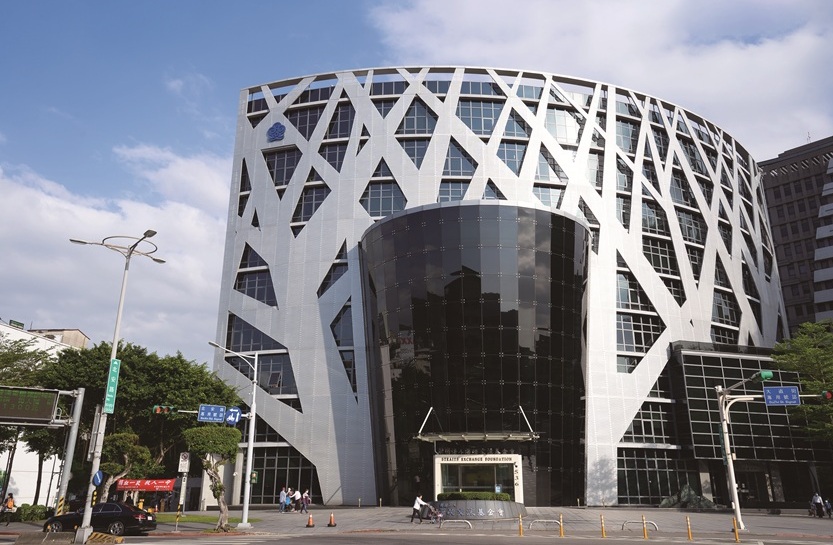
In June 2008 institutionalized talks between Taiwan’s semiofficial Straits Exchange Foundation and China’s Association for Relations Across the Taiwan Straits resumed after a 10-year hiatus. By August 2015, 11 rounds of negotiations had been held alternately on either side of the Taiwan Strait, producing 23 formal agreements, of which 21 have come into effect, and two consensuses. Most significant among the accords is the Cross-Strait Economic Cooperation Framework Agreement concluded in June 2010, which aims to institutionalize trade and economic relations between Taiwan and China.
Peace and Stability
To promote a stable economy, the country requires a peaceful and secure external environment, especially with regard to China. In his inaugural address on May 20, 2024, President Lai stressed that Taiwan Strait peace, mutual benefit and prosperous coexistence should be the shared goals of both parties.
Democracy and freedom are unwavering core values, and prosperity, gained through lasting peace and stability, is the country’s objective. The government will neither yield nor provoke, but instead maintain the cross-strait status quo and seek to resume healthy and orderly exchanges in line with the principle of parity.
However, in recent years China has set political preconditions for cross-strait exchanges, unilaterally suspended official interactions and continuously exerted political suppression and military coercion. On Jan. 2, 2019, China proposed exploration of the “one country, two systems” model for Taiwan, a profound disruption of the status quo.
In 2022 Nancy Pelosi, then speaker of the US House of Representatives, visited Taiwan, and the following year then President Tsai Ing-wen met with the subsequent House speaker, Kevin McCarthy. In the wake of both events, the Chinese authorities ramped up pressure on Taiwan through intensified political interference and military threats along with economic coercion and other gray zone tactics.
In light of geopolitical tensions, the government has updated the Act Governing Relations Between the People of the Taiwan Area and the Mainland Area. Amendments passed to date have established an oversight mechanism for cross-strait political agreements and adjusted fines for unauthorized Chinese investment. Articles were also amended to tighten restrictions on travel to China by anyone who was commissioned by or received a research grant from the government and possesses or has access to key national security-related technologies, as well as to strengthen regulations preventing Chinese enterprises from conducting unpermitted business activities in Taiwan via third party investment.
The government will consider the development of the cross-strait situation in accordance with the principles and directions of President Lai’s policy. It will listen to voices from all sectors of society, strengthen management mechanisms for cross-strait exchanges, improve democracy and defense mechanisms and coordinate with relevant authorities to amend laws and regulations when necessary. This is intended to promote positive cross-strait interaction and maintain normal and orderly exchanges between the two sides.
Consistent Approach
The government will continue to address cross-strait ties based on the constitution of the ROC Taiwan, the Act Governing Relations Between the People of the Taiwan Area and the Mainland Area, and the will of the people.
The government calls on the authorities in Beijing to face the reality of the ROC Taiwan’s existence and respect the choices of the people of Taiwan by engaging with the legitimate government they have chosen.
The government has repeatedly stated that the Chinese Communist Party should cease its political and military intimidation, and share with Taiwan the global responsibility to maintain peace and stability in the Taiwan Strait as well as the greater Indo-Pacific. Despite threats from the CCP, Taiwan will actively promote the Four Pillars of Peace action plan to safeguard the values of freedom and democracy and defend regional peace and stability. We will promote healthy and orderly cross-strait exchanges in accordance with the ROC (Taiwan)’s relevant laws, regulations and Constitution.
It encourages China to choose dialogue over confrontation and exchange over containment.
The government has repeatedly stated that the Chinese Communist Party should cease its political and military intimidation and share the global responsibility to maintain rules-based order. Despite threats from the CCP, Taiwan will uphold the Four Unchanged Commitments, based on former President Tsai Ingwen’s Four Commitments: defend national sovereignty; maintain the status quo of peace and stability in the Taiwan Strait; hold healthy and orderly dialogue and exchanges between the two sides on the basis of parity and dignity; and protect Taiwan’s democratic and free way of life, while promoting the Four Pillars of Peace action plan and 17 major strategies to respond to major national security threats.
The government will continue deepening cooperation with the US, Japan and other like-minded countries to counter China’s threats to Taiwan; promote regional peace, stability and prosperity; and protect the nation’s interests.